Structural drying in Collingdale, PA
Wet floors, walls and framing keep absorbing moisture until they are dried, so air movers and dehumidifiers run and moisture meters decide when the structure is truly dry.
(888) 557-1733Call to set up the drying- Air movers and dehumidifiers
- Meter readings logged
- Dry standard confirmed
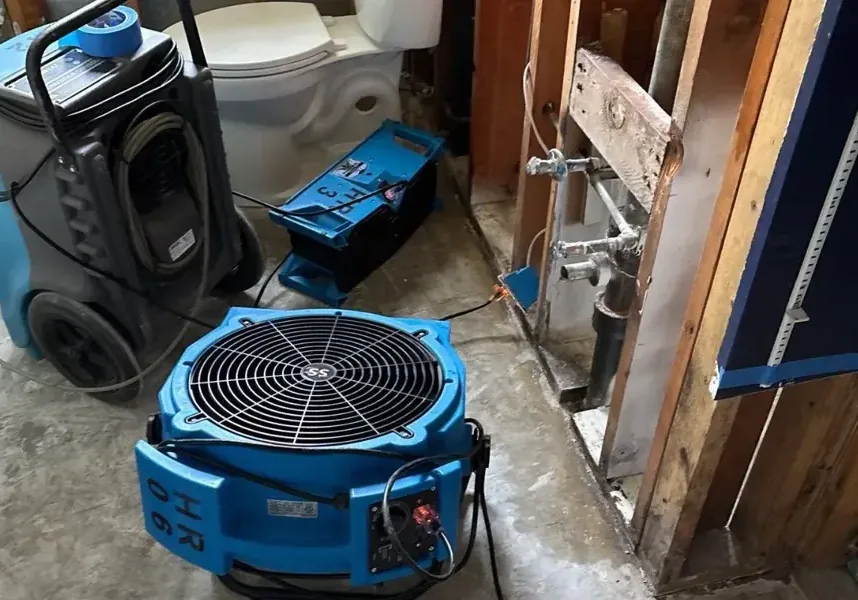
First steps for structural drying
- Set the equipment: Air movers and dehumidifiers go where readings show water.
- Log the readings: Meters record moisture in each wet material.
- Adjust each visit: Equipment is moved as areas dry.
- Confirm dry: Equipment leaves only when readings match a dry standard.
What does structural drying cost in Collingdale, PA?
Drying cost follows the number of rooms, the materials and the days of equipment. One or two rooms sit at the low end, and a whole house or the most stubborn loss is the top range.
One or two rooms
- Few materials wet
- Short equipment stay
- Readings logged
Level or basement
- More equipment
- Longer drying period
- Several readings
Whole house or Class 4
- Dense materials wet
- Extended equipment stay
- Detailed monitoring
Ranges are typical, not a quote: the water category, the square footage, the material class and how fast drying started move the number most. Run the water damage cost calculator for a closer range.
How structural drying is handled in Collingdale
- 01
Call
Describe what was wet and when it happened.
- 02
Set up
Equipment goes in where readings show water.
- 03
Monitor
Meters are read each visit.
- 04
Finish
Equipment leaves when readings are dry.
Why drying takes equipment
Opening windows and running a fan does not pull moisture out of studs, subfloors or drywall. Air movers push air across wet surfaces so water leaves them, and dehumidifiers capture that moisture from the air so it cannot settle somewhere else. Without that capture, the air in a closed up house simply carries water to the next cool wall.
Surface water gone but walls still damp?
(888) 557-1733Ask about the dryingMeasuring the progress
Moisture meters read the water content of wood, drywall and flooring, and thermal checks show cool damp patches. Readings are logged every visit, so the crew and the homeowner can see wet spots shrink and know when equipment can leave. A wall that looks dry to the eye can still read wet, which is why readings count more than appearance.
What stays and what goes
Solid framing and many floors can be dried in place. Materials that stay wet or touched dirty water are removed, which is explained on the sewage backup cleanup page. The water extraction page covers the step before drying begins. Insulation that held water, pad and soft wall board are the usual losses, and keeping them wet risks odor and damage that costs more later.
How long equipment stays
Equipment stays for as long as the readings need. Thick framing and subfloors dry slowly, while thin drywall dries faster, so the crew adjusts the setup at every visit and removes machines from dry rooms first.
Structural drying across Collingdale and nearby communities
Drying equipment goes to homes across the borough, from the area around the Public Library to the blocks off MacDade Boulevard, in ZIP code 19023.
The same service nearby: structural drying in Upper Darby, Darby, Clifton Heights.
Related water damage services
Structural Drying questions in Collingdale, PA
Can a fan and open windows dry a flooded home?
Not fully. Fans move air, but moisture inside framing and subfloors needs dehumidifiers and air movers working together.
How loud is the equipment?
Air movers and dehumidifiers hum steadily and run through the drying period, so some noise is normal.
Why does the crew come back?
To read the meters and adjust the equipment. Drying changes day to day, and readings decide when the job is done.
Will drying raise the electric bill?
The equipment draws power during the drying period, which is a normal part of the process. The adjuster can discuss it.
What if a wall still reads wet?
The crew may open a small section to let air reach it, or extend the drying time until the reading drops.
Is drying needed after clean water leaks?
Yes. Clean water still soaks materials, and drying prevents warping, odors and long term damage.
Finish the job with proper drying
Tell the dispatcher what was wet and how long ago. The crew sets up the equipment, reads the meters and keeps going until every material is dry.
(888) 557-1733Call about the dryingUpper Darby Water Damage Restoration
The township and Delaware County
Water and sewage losses only
Find us on Google