Burst Pipe Water Damage in Upper Darby, PA
The restoration team extracts water from a burst supply pipe, opens plaster or drywall only where the readings point, and dries the wall cavities and joists before any repair starts.
(888) 557-1733Pipe split inside the wall? Get it dried- 24/7 extraction
- Thermal imaging in the wall
- IICRC S500 drying
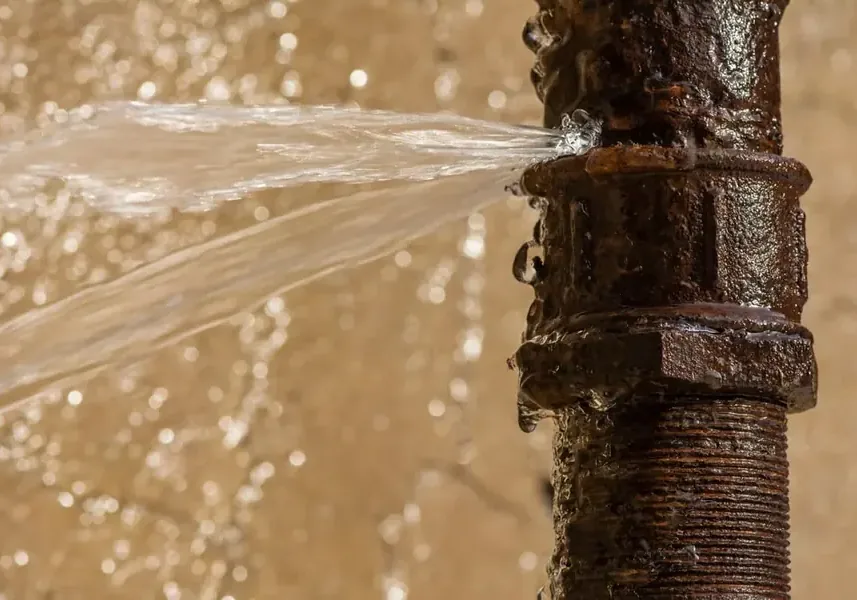
First steps for burst pipe water damage
- Close the main valve: Shut off the water at the main, usually where the service enters the basement.
- Open the faucets: Drain the remaining pressure at the lowest tap in the house.
- Stay out from under ceilings: A bulging ceiling can fall; keep people and pets clear.
- Call a plumber and the crew: The pipe gets repaired while the restoration team starts extraction.
What does burst pipe water damage cost in Upper Darby, PA?
In Upper Darby, burst pipe water damage cleanup typically runs $1,500 to $12,000, depending on how many floors the water reached, plaster versus drywall, the water category and how fast drying started.
One wall or room
- Extraction
- Injection drying
- Daily readings
Two floors through a ceiling
- Ceiling and wall openings
- Subfloor drying
- Claim documentation
Whole level or delayed
- Plaster and drywall removal
- Contents handling
- Full structural drying
Ranges are typical, not a quote: the water category, the square footage, the material class and how fast drying started move the number most. Run the water damage cost calculator for a closer range.
How burst pipe water damage is handled in Upper Darby
- 01
Locate
Thermal imaging maps water in walls and ceilings.
- 02
Extract
Standing water pulled from floors and the slab.
- 03
Open
Small, controlled openings where plaster stays wet.
- 04
Dry
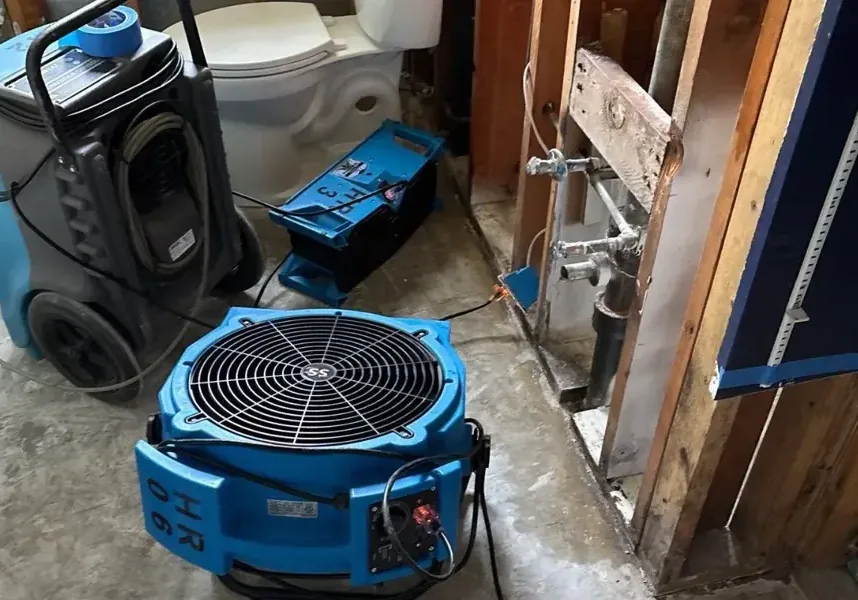
Cavity injection and LGR drying to the goal.
Plaster walls dry differently
Many older homes still have plaster on wood or metal lath, which holds water longer than drywall and cracks if it is torn open carelessly. The drying team uses thermal imaging and meters to find the wet area, then drills small holes for injection drying where possible instead of removing whole walls. Plaster that stays attached to the lath is kept; plaster that sags or loses its grip is removed.
Pipe still leaking into the walls? Dispatch runs 24/7.
(888) 557-1733Have the wall cavities driedWhere water from a burst pipe goes
Water follows framing and gravity. A pipe that splits on the second floor shows up as a stain on the first-floor ceiling, wet subfloor under a bath and water collecting on the basement slab. Every level gets mapped, because the visible stain is usually smaller than the wet area.
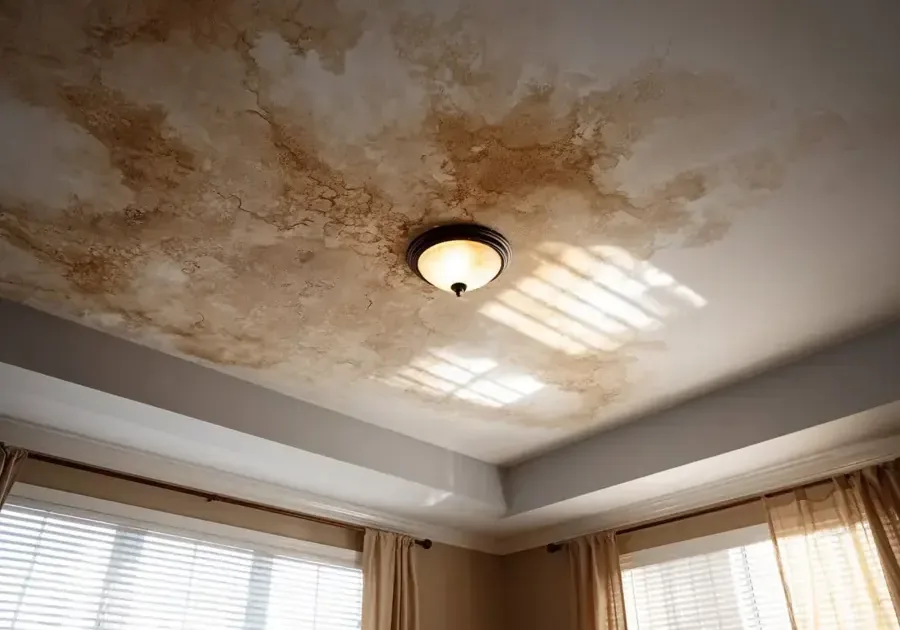
Ceilings below a burst pipe
A sagging ceiling holds water and can drop without warning. The crew opens a small relief hole to drain it into a bucket, keeps people out from under it, and decides from the readings whether the ceiling dries in place or comes down.
Before and after the plumber
A plumber repairs the pipe, and the restoration crew dries the structure. Older galvanized systems often fail again nearby, so many owners have the rest of the supply piping checked. The EPA WaterSense leak guide lists simple checks, and the EPA WaterSense program explains how to spot hidden leaks on the water bill.
Burst pipe water damage across Upper Darby and nearby towns
The restoration team covers ZIP 19082 and 19026, from the rowhome blocks of 69th Street, Highland Park, Bywood and Stonehurst to Drexel Hill, Aronimink, Primos and Westbrook Park.
Nearby coverage reaches Darby, Collingdale, Lansdowne, Clifton Heights, Yeadon, Millbourne, Haverford, West Philadelphia.
Related water damage services
Burst Pipe Water Damage questions in Upper Darby, PA
Why do pipes burst in older homes?
Galvanized steel corrodes from the inside and copper joints wear thin, so a pipe can fail at a weak spot even without a freeze. Pressure spikes and old fittings at fixtures add to it.
Is burst pipe water damage covered by insurance?
Sudden and accidental discharge from a burst pipe is commonly covered after the deductible, while slow leaks over time often are not. Check your own policy.
Do plaster walls have to come out after a burst pipe?
Not always. Plaster that stays attached to the lath can often be dried with injection drying and small access holes. Sagging or loose plaster is removed.
How long does burst pipe drying take?
Most losses dry in three to six days. Plaster, hardwood and multiple floors take longer, and the readings set the end date.
Does burst pipe water stay clean water?
Only if extraction starts fast. Clean water that sits 24 to 48 hours picks up contaminants and can become Category 2.
Should the whole house be repiped after a burst pipe?
That is a plumber's call. Homes with original galvanized supply piping often see repeat failures, so many owners have the system checked.
Burst pipe soaking the plaster? Get the walls dried right.
Water inside a wall keeps spreading through lath, framing and subfloor until it is found with thermal imaging and dried to a measured goal.
(888) 557-1733Dry out the burst pipe messUpper Darby Water Damage Restoration
The township and Delaware County
Water and sewage losses only
Find us on Google