Sewage in a home raises two questions at once: who fixes the sewer, and who cleans the house. The borough's own statements answer the first, and the second is a separate job.
Key takeaways
- The borough says it maintains its sewer system and that periodic backups into homes or businesses may occur.
- The borough says its responsibility generally ends when the sewer is cleared and the problem causing the blockage has been addressed.
- Cleanup inside the building is a separate job, and sewage is Category 3 water from the start.
- The borough notes that most homeowners' insurance policies have optional riders for sewer backups that provide coverage only if purchased.
- About half of the borough's homes are rented, so tenants and landlords both need to know who to notify.
What the borough says about its sewers
Darby Borough says it maintains its sewer system. It also says periodic backups into homes or businesses may occur.
The borough says its responsibility generally ends when the sewer is cleared and the problem causing the blockage has been addressed. After that, the damage inside the building is a matter for the household and its insurer.
What that means after the sewer is cleared
A cleared sewer does not mean a clean house. The pipe may be flowing again while the floor, walls and belongings are still contaminated.
- Sewage soaks into carpet, pad, drywall and wood, and does not stay on the surface.
- Disinfection and drying are needed before the rooms are safe to use again.
- A written record of the date, the contact at the borough and the clearing helps the insurer.
- Porous items that touched the sewage are normally removed and discarded.
Why terra cotta matters
A 2021 regional sewage plan says the borough's sewer systems are primarily terra cotta pipe. Terra cotta is fired clay, and clay pipe joints can crack, shift or let roots in as they age.
The same plan lists the borough in the Eastern Service Area of DELCORA, the Delaware County regional wastewater authority.
None of this says where any one blockage is. It does explain why an older system can back up, and why the cleanup has to be treated seriously every time.
The insurance rider that decides coverage
The borough notes that most homeowners' insurance policies have optional riders for sewer backups that provide coverage only if purchased. A policy without the rider may pay nothing for sewage damage.
Checking the policy before a backup is far easier than checking after one.
- Look for wording such as water backup, sewer backup or sump discharge.
- Ask what the limit is, since backup limits are often lower than the main policy.
- Renters can look for the same endorsement on their own policies.
- Keep a copy of the declarations page somewhere that does not depend on the house.
What cleanup of a sewage backup involves
Category 3 from the start
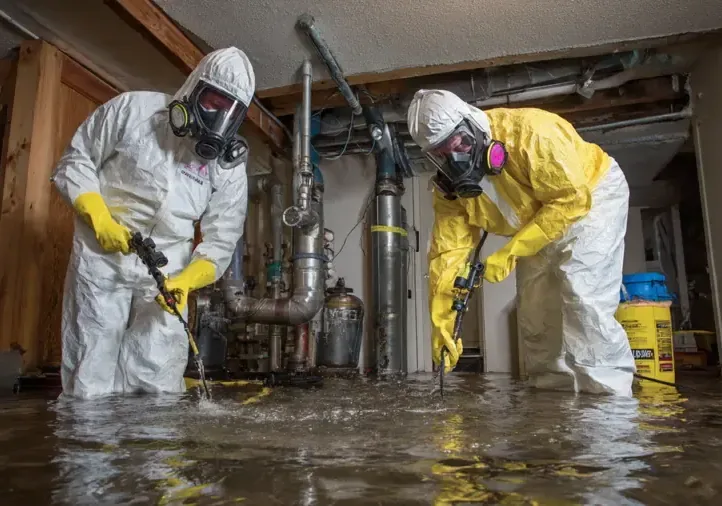
Sewage is treated as Category 3 water from the first moment. Crews wear protective gear, close off the area and extract the liquid with equipment that is cleaned afterward.
The process is laid out in the sewage and floor drain backup cleanup service.
When the liquid is deep, water extraction comes first, since every minute of contact lets sewage soak further into the structure.
Removal, disinfection and drying
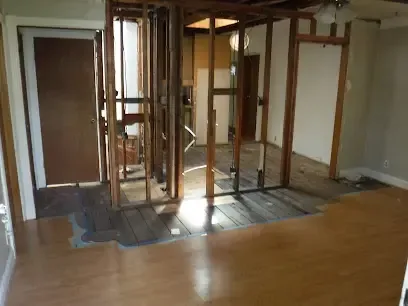
Porous materials that the sewage touched are removed, hard surfaces are cleaned and disinfected, and fans and dehumidifiers dry the framing and the floors. Structural drying continues until the meter readings settle.
- Carpet, pad and lower drywall are taken out and bagged.
- Concrete and sealed floors are scrubbed and disinfected.
- Cabinet bases and baseboards are checked for hidden moisture.
- Readings are logged at each visit until the dry goal is met.
What to ask when reporting a backup
A report to the borough is more useful when it is specific, and a written answer protects the household later.
- Ask whether the borough found a blockage in the sewer and where.
- Ask for the date and time the sewer was cleared.
- Ask whether other homes reported a backup at the same time.
- Write down the name of the person who answered and the time of the call.
Renters, landlords and records
The borough's homeownership rate was 49.9 percent in 2024, so about half of its homes are rented. A tenant who finds sewage should tell the landlord in writing and photograph the damage.
A landlord's policy and a tenant's renters policy cover different things, so each household reports its own loss.
- Send the landlord a dated message with photos attached.
- List damaged belongings with approximate values.
- Keep receipts for cleanup, storage and temporary housing.
- Ask the crew for a written summary of the work at the end.
What can be saved and what cannot
Sorting belongings after a backup is a health question as much as a cost question. Items that cannot be disinfected should not be kept just because they look fine.
Items that are usually discarded
Carpet, pad, mattresses, upholstered furniture, cardboard, paper and food that touched the water are normally thrown away. Photograph and list each one first.
Items that can often be cleaned
Glass, metal, sealed wood, hard plastic and ceramic can usually be washed and disinfected. Electronics and appliances that sat in the water should be checked by a technician before use.
Odor, air quality and what lingers
A smell that stays after the visible mess is gone means sewage is still sitting in a porous material, a wall base or a floor seam. Air fresheners cover the smell without fixing the source.
Crews use air scrubbers with HEPA filters and sealants where needed, and they keep reading moisture until the odor and the numbers both clear. The wider list of services is on the Darby water damage hub.
- A smell near a baseboard often means moisture inside the wall base.
- Carpet tack strips and subfloor seams hold contamination after pad is removed.
- Air scrubbers run while demolition and cleaning stir up particles.
- Final readings and a clean smell are both checked before rebuilding.
A backup is not a clogged toilet
A clogged toilet stays inside its own drain and usually clears with a plunger. A sewer backup brings water up through the lowest drains in the building, and when several drains back up together the sewer is the likelier source.
That difference matters for the call to make. A single clogged fixture is a plumbing job, while sewage on the floor is a Category 3 cleanup that cannot wait.
Questions
Who is responsible when sewage backs up into a home here?
The borough says it maintains its sewer system and that its responsibility generally ends once the sewer is cleared and the cause of the blockage is addressed. Who pays for what inside the house depends on the situation and the insurance.
Does homeowners insurance pay for sewage damage?
Often only with a sewer backup rider, which the borough notes is optional. Check the policy wording.
Is a sewage backup the same as a clogged toilet?
No. A clogged toilet stays inside the fixture's drain. A sewer backup brings water up through the lowest drains and can involve the main sewer.
How is sewage cleaned up safely?
Crews wear protective gear, remove porous materials, disinfect hard surfaces and dry the structure until readings settle.
Can a tenant call for cleanup?
A tenant can report the problem and request help, but major removal in a rental generally needs the landlord's approval.