Emergency Water Extraction in Darby, PA
Water left standing on a floor keeps soaking into drywall, padding and framing. Pumps and wet vacuums pull it out first, and moisture readings then show what still needs drying.
(888) 557-1733Call about the standing water now- Pumps and wet vacuums
- Moisture readings
- Photo notes for claims
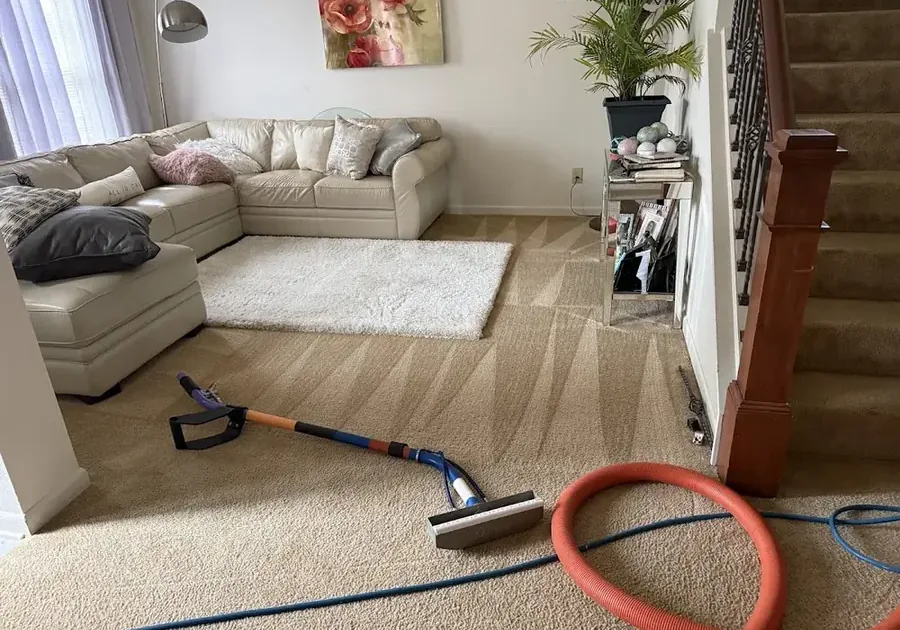
First steps for emergency water extraction
- Find and stop the source: The crew locates the leak or entry point and shuts it off so more water stops arriving.
- Pump and extract: Pumps clear deep water and extractors lift what soaked into carpet, padding and floors.
- Read the moisture: Meters check walls, subfloors and framing to map what stayed wet.
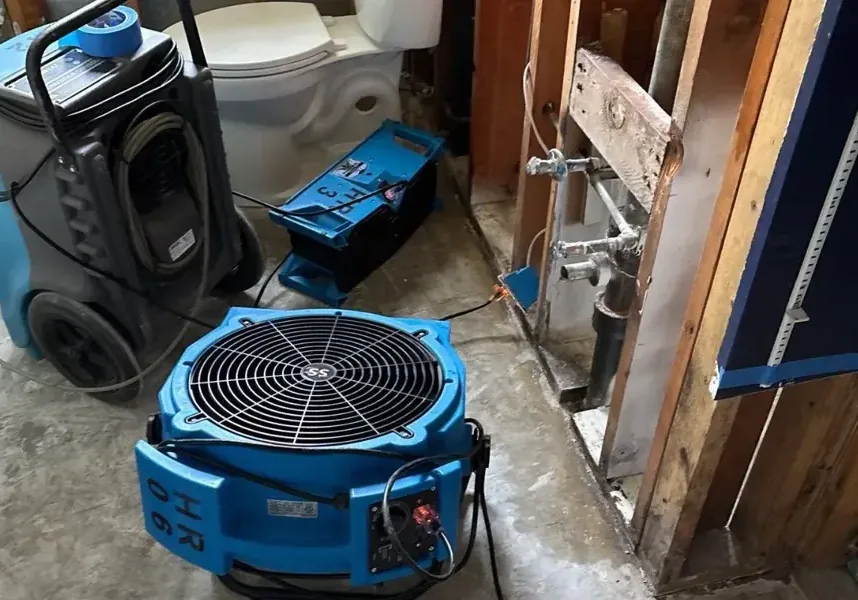
- Set up drying: Fans and dehumidifiers go where readings call for them, with notes kept for the claim.
What does emergency water extraction cost in Darby, PA?
Pumping out one room or hallway usually costs $400 to $1,200, while a full lower level is $1,200 to $2,500. Two floors or contaminated water reaches $2,500 to $3,500 or more.
One room or hallway
- Portable pump or wet vacuum
- Carpet and padding checked
- Short drying plan
A full lower level
- Larger pumps and extractors
- Walls and subfloor checked
- Several days of drying
Two floors or contaminated
- Water on more than one level
- Contaminated material removed
- Disinfecting after extraction
Ranges are typical, not a quote: the water category, the square footage, the material class and how fast drying started move the number most. Run the water damage cost calculator for a closer range.
How emergency water extraction is handled in Darby
- 01
Assess
Walk the rooms, find the source and sort clean water from contaminated.
- 02
Extract
Pump, vacuum and lift standing water from every wet surface.
- 03
Measure
Take moisture readings and photos before and after removal.
- 04
Dry
Run fans and dehumidifiers and recheck readings until materials are dry.
How standing water comes out
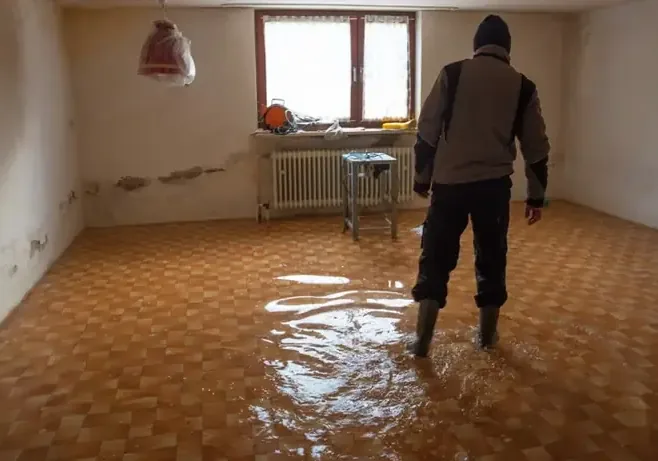
The crew starts by finding where the water came from and shutting off the source if it is still running. Furniture, electronics and rugs are lifted to dry ground so they stay out of the way. Portable pumps clear anything deep, then extractors lift what soaked into carpet, padding and hard floors. Wet vacuums handle corners, stairs and the spots pumps cannot reach.
Standing water now? Call and describe what is wet.
(888) 557-1733Darby extraction helpA reminder from Main Street basements
On October 1, 2010, Darby Creek swelled over its banks and water poured into Main Street basements. That flood receded quickly, but soaked materials rarely dry as fast as the water leaves. The same holds after any flood or leak: once the standing water is gone, damp framing, subfloor and insulation still hold moisture for days.
What happens after the pumps stop
Pulling out the water is only the first half. Moisture meters check drywall, baseboards, subfloors and framing, and the readings decide where fans and dehumidifiers go. Wet padding is usually cut out and removed, while hard floors and cabinets are checked before anyone decides what can stay. That follow up work is structural drying, and readings repeat until the materials reach a dry standard.
Clean water or something worse
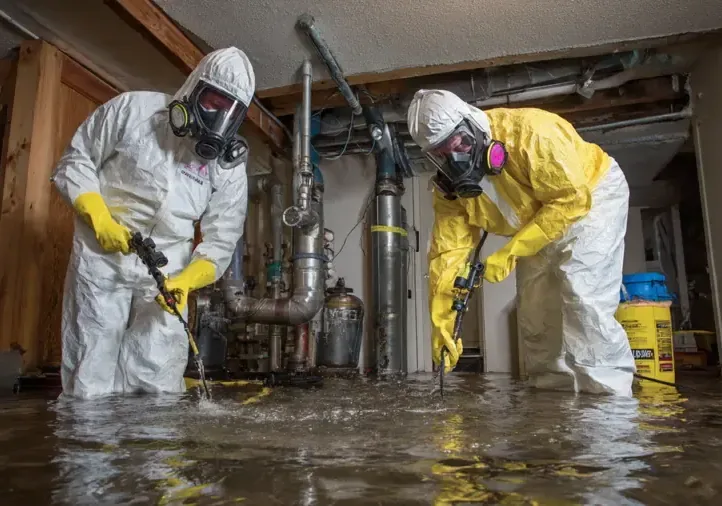
Water from a clean supply pipe is handled differently from water that carries sewage or creek silt. Contaminated water means protective gear, more material removal and disinfecting after extraction. The crew sorts that out before choosing a plan, and says so plainly. The full water extraction page lists the rest of the process.
Emergency water extraction across Darby and nearby communities
Crews work across the Main Street area, the Chestnut Street area along the creek, the Pine Street area and the blocks near Chester Pike and Walnut Street, ZIP 19023.
The same service nearby: emergency water extraction in Upper Darby, Yeadon, Collingdale.
Related water damage services
Emergency Water Extraction questions in Darby, PA
How is standing water removed from a flooded room?
Portable pumps move deep water out, then extractors and wet vacuums lift what remains in carpet, padding and hard floors. Wet items are moved aside first so the floor can be reached.
Does extraction dry the house too?
No. Extraction removes the liquid water only. Drywall, framing and subfloors still hold moisture afterward, so drying equipment and moisture readings follow until the materials reach normal levels.
What should be done before the crew arrives?
Stay out of rooms where water reaches outlets, stop the source if that is safe, and lift small items off the floor. Photos of the water and the damage help later with the claim.
Is creek water treated differently from pipe water?
Yes. Creek water carries silt and contaminants, so it is handled as contaminated. That means protective gear, more material removal and disinfecting once the water is out.
Which carpets and floors can be saved?
Carpet that stayed wet briefly with clean water can often be dried where it lies, though padding is usually replaced. Hardwood, laminate and tile are tested with meters before anyone decides.
What does the crew document?
Photos of the water, the source and each affected room, plus moisture readings from the start and end of drying. Adjusters generally want that record.
Get the water out before it spreads further
Call, describe what is wet, and the crew explains the plan from pumping to moisture readings to drying, so decisions rest on the facts.
(888) 557-1733Call for water removalUpper Darby Water Damage Restoration
The township and Delaware County
Water and sewage losses only
Find us on Google