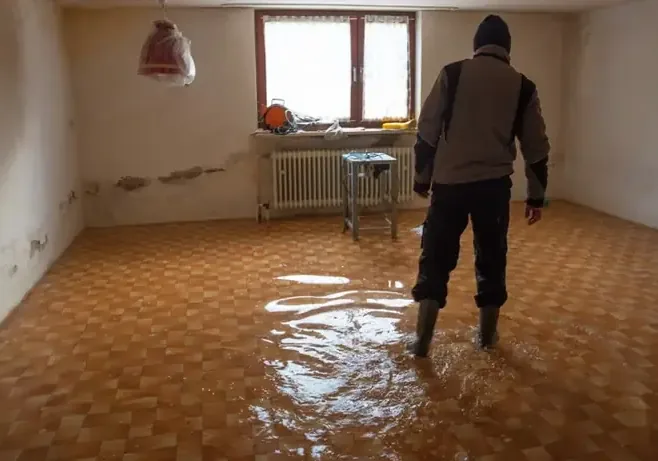
When Darby Creek leaves its banks, the water that reaches a basement does not stay clean and does not stay away. This post covers what happened on Main Street in 2010 and what cleanup looks like once the creek drops.
Key takeaways
- Creek water is Category 3, so wet porous materials in a flooded lower level are normally removed.
- A creek that drops quickly can leave silt, odor and saturated masonry behind.
- The order matters: standing water first, then debris, then cleaning, then drying to meter readings.
- Photograph the lower level before moving anything, since creek flooding is usually a flood claim and not a plumbing claim.
- Apartment residents should tell building management right away, because shared systems and several households may be affected.
What happened to Main Street basements in October 2010
On October 1, 2010, the creek swelled over its banks and the entire borough was shut down to everything but emergency vehicles.
Water poured into Main Street basements, and residents of the Darby Court Apartments were evacuated, some by ambulance and others by SEPTA bus.
The flash flood waters receded quickly, and by lunchtime crews were cleaning the MacDade Boulevard Bridge. Inside a flooded lower level, the work was only starting.
Why fast-receding water still leaves a wet building
A creek that drops in a few hours leaves behind what it carried: silt, plant debris, oil and runoff from streets and yards. Concrete stays wet, masonry soaks up water like a sponge, and anything stored low holds it too.
The air in a closed lower level is also saturated, so surfaces that look dry on top keep releasing moisture. A building is judged by meter readings, not by how the floor looks once the standing water is gone.
- Silt dries into a fine dust that is hard to clean from porous surfaces.
- Masonry and concrete can hold water long after the surface looks dry.
- Stored boxes, wood furniture and insulation hold both water and contamination.
Why creek water is Category 3
The creek runs through 30 municipalities in one of the country's most densely developed corridors, so it collects runoff from a great deal of pavement, yards and drains before it reaches a borough basement.
A 2012 Philadelphia Inquirer report called it one of the country's most flood-prone streams. Whatever the exact path, water from a creek is treated as grossly contaminated, and the IICRC S500 standard classes it as Category 3.
- Porous materials such as carpet, pad, insulation and lower drywall are removed.
- Hard surfaces are cleaned and disinfected rather than thrown away.
- Protective gear is worn by anyone entering the wet area.
The cleanup order for a flooded lower level
Pump out the standing water
Pumps and extractors remove the water first. Doing this early limits how far water wicks into drywall and wood, and a crew doing water extraction also checks that the source has stopped before the equipment leaves the room.
Remove what cannot be cleaned
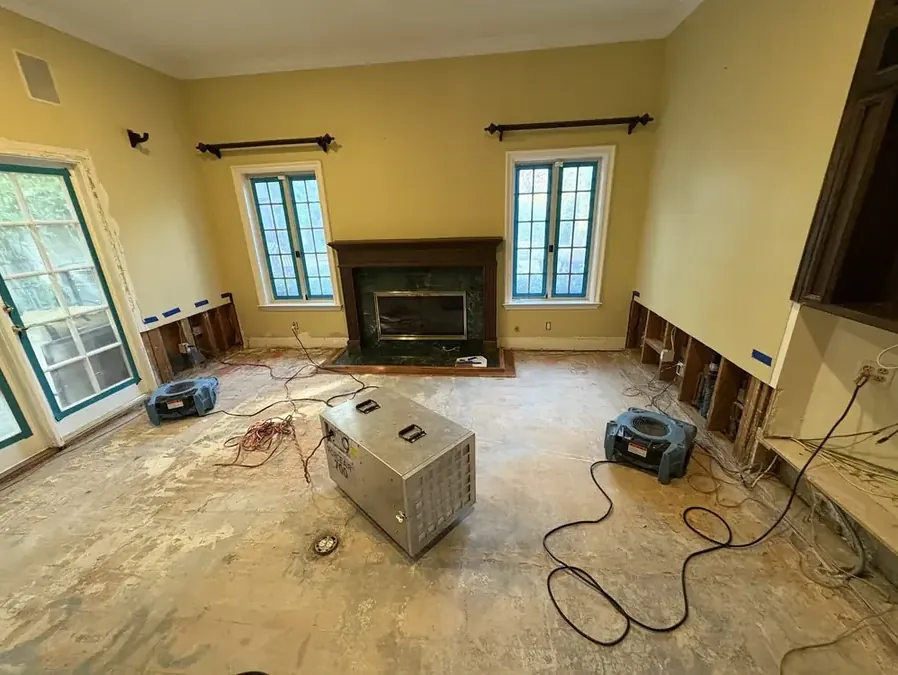
Wet carpet, pad and soaked cardboard come out in bags. Drywall is cut above the high-water mark so the wet section can be taken away and the framing exposed.
- Insulation that was touched by creek water is removed, not dried.
- Stored belongings are sorted and photographed before discarding.
- Silt is shoveled and rinsed, and the rinse water is extracted.
Clean, disinfect and dry
Hard surfaces are scrubbed and treated with disinfectant. Then fans and dehumidifiers pull moisture out of the masonry and framing until the readings settle, which is the heart of basement flooding cleanup.
A full flood plan, from the first pump to the final reading, is laid out under storm and creek flood cleanup.
Furnaces, water heaters and electrical panels
A lower level often holds the equipment a household depends on. Creek water that reaches a furnace, a water heater or a panel can leave the unit unsafe even after it dries.
None of these should be restarted until a qualified technician or the utility has checked them.
- A heating system that sat in creek water needs inspection before it runs again.
- A water heater with a wet burner or element needs the same check.
- A wet electrical panel is a job for the utility or an electrician, not for the household.
- Fuel tanks that shifted or leaked should be reported at once.
Records for the insurer
Creek flooding is generally a flood claim, not a plumbing claim. The Inquirer report called the creek a significant drain on the National Flood Insurance Program, a reminder that flood coverage is its own policy.
Photograph the lower level, the high-water mark and every damaged item before anything moves, keep receipts, and ask the insurer before discarding anything.
- Wide and close photos of each room, with the date visible.
- A list of damaged belongings with approximate ages and values.
- Receipts for pumps, cleaning supplies and temporary housing.
- Notes on who was contacted and when.
What later storms added to the picture
The 2010 flood was not the borough's only brush with high water. Flooding from Hurricane Floyd in 1999 left homes near Chestnut Street under water up to their rooftops, and dozens of them were later demolished.
The borough declared a state of emergency before Hurricane Irene in August 2011 and ordered evacuations ahead of Hurricane Sandy on October 29, 2012. On January 10, 2024, heavy rain flooded areas near the creek again, and the Red Cross ran a shelter at the borough recreation center.
Taken together, these events show why a household with a lower level benefits from knowing the cleanup steps before the next warning rather than after it.
Apartment buildings and shared systems
The 2010 evacuation of apartment residents is a reminder that a flood in a multi-unit building raises questions a single house does not: shared boilers, shared electrical rooms and several households' belongings.
Tenants should tell building management in writing and keep their own photos. A renters policy usually covers a tenant's belongings, while the owner's policy covers the building, and both depend on the wording.
A first-day checklist for a flooded lower level
The first day goes better with a plan, even a short one. Each step below keeps people safe and keeps the claim clean, and the full range of local help is listed on the Darby water damage hub.
- Stay out of standing water until the electricity is confirmed safe.
- Photograph the room from the stairs before anything is touched.
- Move small valuables and papers to a dry upper floor.
- Arrange pumping and moisture readings right away.
- Keep wet items for the adjuster to see, or photograph them in detail.
- Write down every call, with the date and the name of the person reached.
Questions
Is water from a creek the same as water from a broken pipe?
No. Water from a broken supply pipe starts clean, while creek water carries silt, runoff and sometimes sewage. It is treated as Category 3 and handled with removal and disinfection.
Can a flooded lower level be dried without removing anything?
Not after creek water. Porous materials that soaked it up are normally removed, while masonry, concrete and framing are cleaned and dried.
Does homeowners insurance cover creek flooding?
Standard policies often exclude flood from outside. Flood coverage is a separate policy, so the wording and the insurer decide.
How long does a flooded lower level take to dry?
Several days in most cases, and longer for masonry. Readings decide when drying is complete.
What should be done first when the creek recedes?
Photograph everything, stay out of standing water near electrical items, and arrange pumping. The sooner the water leaves, the less it soaks into the structure.