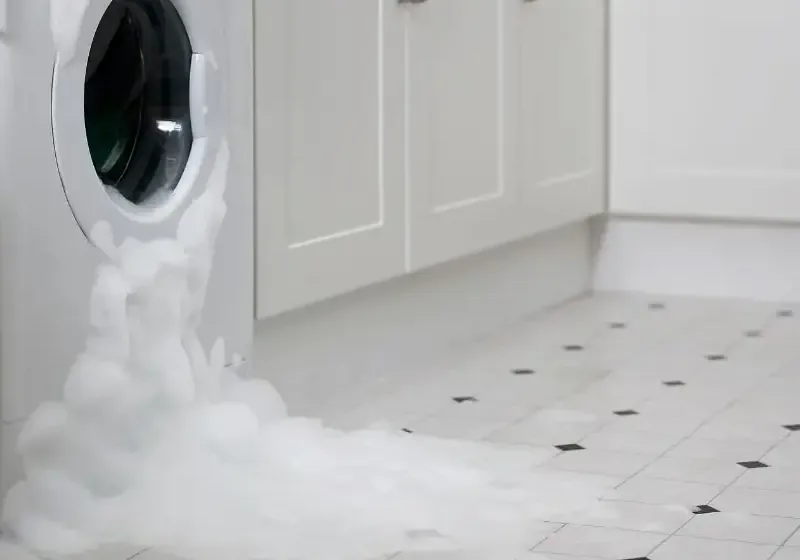
A leaking washer, dishwasher or refrigerator rarely announces itself. The water runs behind the machine or under the cabinet and spreads until a stain, a smell or a soft floor gives it away.
Key takeaways
- Most appliance leaks start at a hose, a supply valve, a drain connection or an ice maker tube, not in the body of the machine.
- Water behind a cabinet or under a floor can spread for days before it shows.
- Closing the shutoff valve stops new water, but it does nothing about what already soaked the floor.
- Moisture meters and thermal imaging find the wet path, so only the damaged material is opened.
- Particleboard cabinet bases swell and fail when wet, so they are checked first.
Why appliance leaks stay hidden
A washer, dishwasher or refrigerator sits against a wall or inside a cabinet, which hides the connections behind and below it. A pinhole in a hose or a loose clamp can drip for weeks without a puddle forming where anyone looks.
The water follows gravity and the easiest path: along the subfloor, into the cabinet base, under flooring and down through any gap to the ceiling below.
Warning signs of a slow leak
Any one of these signs is worth a look behind and under the appliance.
- A floor that feels soft, spongy or slightly raised near the machine.
- Flooring that cups, buckles or changes color along a seam.
- A musty smell in the kitchen or laundry area that does not go away.
- A cabinet base that swells, stains or peels along the bottom edge.
- A ceiling stain or bubbling paint in the room below.
- A water bill that climbs with no change in how the household uses water.
Where the water usually comes from
Washer hoses and drain connections
Rubber supply hoses crack and split with age, and a fitting that is not tight can seep under pressure. The drain hose can also pop out of its standpipe during a spin cycle and pour water across the floor.
Dishwasher supply and drain
The feed connection under the sink, the door gasket and the drain hose are the usual weak points. A leak here runs into the cabinet base and the flooring beneath it.
Refrigerator ice maker tubes
A small plastic tube feeds the ice maker and the water dispenser. It can crack, kink or loosen, and the leak sits behind a machine that is rarely moved.
Why speed matters in a dense borough
Collingdale is a dense borough. The American Community Survey 2024 five-year estimate counts about 3,968 housing units and 3,739 households, at about 2.4 people per household.
Busy households run laundry and dishes all the time, so a failing connection is under pressure often.
The borough grew from 603 residents in 1900 to 7,857 in 1930, so it has been built up for generations. In a long-used building, a leak that goes unnoticed can soak the same spot for a very long time.
How hidden water is found
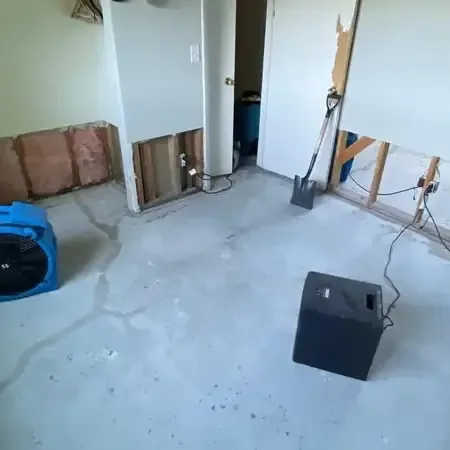
A restoration crew starts by stopping the water if the source is still running, then maps the wet area. A moisture meter reads wood, drywall and subfloor, and a thermal camera shows cool, wet patches without opening anything.
Only the damaged material is opened: a toe-kick panel, a section of cabinet back, a strip of flooring. If the moisture reaches a ceiling below, the same readings steer that opening.
The appliance leak cleanup service follows this mapping step by step, and water extraction comes first when there is standing water.
- Meter readings are taken at several points and compared with a dry spot elsewhere in the home.
- Hidden pockets under cabinets and behind baseboards are checked even when the floor looks fine.
- Readings are recorded so the drying can be shown to be complete.
Drying what the leak reached
Wet flooring and subfloor are dried with air movers and dehumidifiers, and drying mats can pull water out from under hard flooring without tearing it up. Particleboard cabinet bases that have swollen usually cannot be saved and are replaced.
Structural drying continues until the readings match a dry reference. Stopping early is how a damp subfloor turns into a smell and a stain months later.
How drying is tracked until it is finished
Drying is a measured process, not a guess. On the first visit the crew records readings at fixed points, and on each return visit the same points are read again.
When the numbers match a dry reference taken elsewhere in the home, the equipment comes out. The full list of services on offer is on the Collingdale water damage hub.
- A moisture meter reads wood, drywall and subfloor at set spots.
- A hygrometer tracks the humidity of the air in the room.
- Equipment is moved as areas finish drying, so the wettest spots keep the most airflow.
- A final set of readings is saved with the job record.
Flooring, cabinets and what can be saved
Hard flooring
Tile and sheet vinyl tolerate water on the surface, but the subfloor beneath can stay wet. A drying mat or a small lift at an edge lets air in without removing the whole floor.
Laminate and engineered boards swell at the seams and often cannot be saved once they cup.
Carpet and pad
Clean water from a supply hose can sometimes be extracted from carpet and pad if the response is quick. Water from a drain hose or a dishwasher drain is dirtier, and the pad is usually discarded.
Cabinets
Solid wood cabinet boxes can dry and stay. Particleboard soaks up water, swells and loses strength, so the base is often cut out and rebuilt while the rest of the run stays in place.
What to do in the first moments
A short checklist keeps a small leak from turning into a large claim.
- Close the shutoff valve to the appliance, or the main shutoff if the valve will not turn.
- Unplug the appliance only if the outlet and the floor are dry.
- Pull the appliance out if it is safe to do so and mop standing water.
- Photograph the leak, the floor and any stained ceiling below.
- Ask for extraction and moisture mapping before the floor is covered again.
Preventing the next appliance leak
Most leaks follow the same pattern, which makes prevention simple. A few minutes of attention every year costs far less than a ruined floor.
- Replace rubber supply hoses with braided stainless hoses and check them whenever the machine is moved.
- Do not run the washer or dishwasher when nobody is home.
- Look under the sink and behind the refrigerator two or three times a year.
- Place a shallow pan or a battery water sensor under the machine.
- Learn where the shutoff valve is before it is needed.
Questions
How can a dishwasher leak under the floor be found?
Look for a soft or discolored floor near the dishwasher, a swollen cabinet base, a musty smell and a stain on the ceiling below. A moisture meter confirms it.
Is a washing machine leak covered by insurance?
A sudden discharge from a failed hose is commonly covered, while a slow seep over a long time may be treated differently. The policy wording and the insurer decide, so report it promptly.
Should rubber washer hoses be replaced?
Many plumbers suggest swapping them for braided hoses every few years and checking them whenever the machine is moved.
Can a leaking ice maker cause serious damage?
Yes. The tube is small, but a steady drip behind the unit can soak flooring and spread under cabinets for a long time before it shows.
Does the floor have to be torn out after an appliance leak?
Not always. If the leak is caught early, drying mats and air movers can save many floors. Readings decide, not the look of the surface.