Sewage coming up through a drain is stressful and unsafe, and the order of the first few calls matters. This post lays out who handles what in Clifton Heights and what the cleanup involves.
Key takeaways
- Sewage is Category 3 water from the first moment, so skin contact and household cleaning are best avoided.
- During normal business hours, a backup is reported to borough hall.
- After hours, 911 reaches the police, who can notify the highway department.
- The borough's sanitary sewer works by gravity, so a backup shows at the lowest drain first.
- Photos, times and the names of everyone contacted help with any insurance claim.
Treat it as a health hazard first
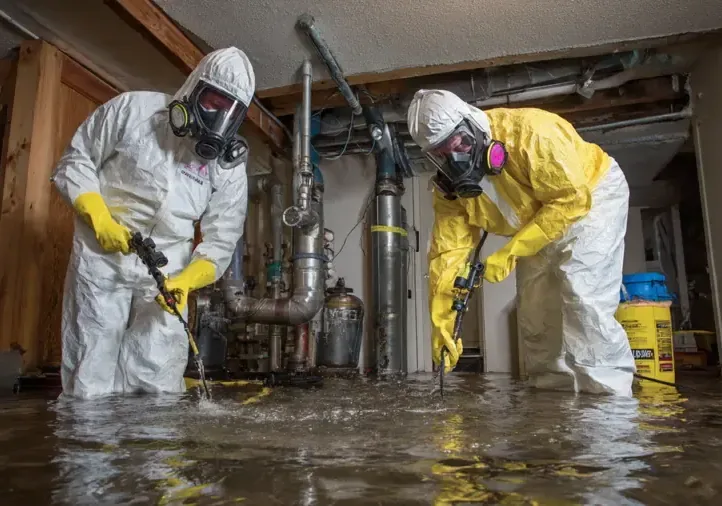
Sewage carries bacteria, viruses and parasites. Water that comes up through a floor drain, tub or toilet is treated as Category 3, and the IICRC S500 standard calls for protective gear and removal of the porous materials it touches.
Before any calls, a few quick steps keep the problem from spreading.
- Keep children, pets and anyone with health risks out of the area.
- Stop running water, flushing and laundry, so no more goes down the drain.
- Wear boots and gloves if the area must be entered, and wash hands thoroughly afterward.
- Do not use a household vacuum or a fan on sewage.
Who to contact during normal business hours
Clifton Heights asks that a sewage backup be reported to borough hall during normal business hours. Public Works handles storm and sanitary sewer inspection and maintenance, so the report tells the borough whether the main or the home's own pipe is the likelier problem.
It helps to ask whether neighbors have reported the same thing. If several homes back up at once, a blockage in the borough main is more likely than a clog inside one house.
What to do after hours
After hours, calling 911 reaches the police, who can notify the highway department. That is the borough's stated route for a backup that happens at night or on a weekend.
The borough website also offers an emergency alert sign-up. It is worth completing before a problem rather than after one.
How the borough sewer works
The borough's sanitary sewer system works by gravity, so everything runs downhill, and it is metered. Sewage from Clifton Heights flows into two systems, the Muckinipattis Authority and the Darby Creek Joint Authority, and both are collected and treated by DELCORA.
Gravity is the reason a backup shows up at the lowest opening in a building, such as a floor drain, a laundry sink or a ground-level tub. Which authority carries a given street is a question for the borough.
What professional cleanup involves
Containment and removal
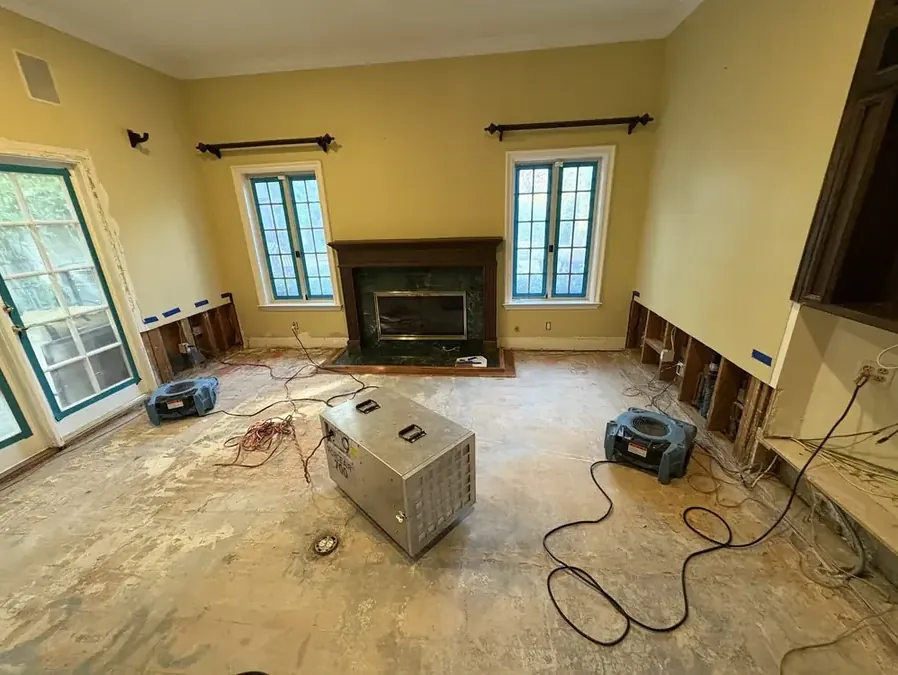
Crews close off the area, extract the liquid and remove carpet, pad, drywall and insulation that soaked it up. Items that cannot be disinfected are bagged and discarded.
A crew doing sewage backup cleanup also checks the path of the water, since sewage that crossed a floor can run under walls and into cabinet bases.
- Plastic barriers and tape keep the rest of the house clean.
- Liquid is extracted with equipment that is cleaned afterward.
- Contaminated debris is double bagged before it leaves the room.
Disinfection and drying
Hard surfaces are cleaned and treated, then fans and dehumidifiers dry the space until meter readings settle. Structural drying covers any framing or subfloor the water reached, since moisture left behind brings odor and later damage.
While waiting for help
The time between the first call and the start of cleanup is when a household can protect the rest of the building. None of these steps replaces professional cleanup, and all of them limit how far the sewage travels.
- Close doors to the affected room and place towels at the gap beneath them.
- Lift small items, shoes and papers off the floor if the path is dry.
- Turn off the heating system fan if the return vent is in the wet room.
- Keep food and dishes away from the affected area.
- Photograph the backup before towels or mops touch it.
Records and insurance
A short log helps every conversation that follows: the time the backup started, who was called and when, and photos of every affected room.
Homeowners policies often treat sewer backup as an optional endorsement, so the wording should be checked early. A tenant should also tell the landlord in writing.
- Photos of the drain, the water and every damaged item.
- The time of each call and the name of the person reached.
- Receipts for cleaning supplies, hotel stays and any other emergency costs.
- A copy of the policy page that mentions water or sewer backup.
The order of calls at a glance
When sewage is on the floor, a simple sequence keeps the response organized and gives every later conversation a record to work from.
- Borough hall during business hours, or 911 after hours, to report the backup.
- A restoration crew for extraction, removal, disinfection and drying.
- A plumber to clear and inspect the pipe once the cleanup is under way.
- The insurer, with photos and times, before anything is thrown out.
- The landlord, in writing, if the home is a rental.
Finding the cause once the water is out
A cleanup solves the damage, but it does not explain the backup. A plumber can clear the blockage and run a camera through the pipe to see whether roots, grease, a belly or a break caused it.
If the blockage sits in the borough main, the borough has to deal with it. If it sits in the pipe between the house and the main, the repair route is a separate question.
Either way, the camera findings go into the file for the insurer.
Rental properties in Clifton Heights need an annual rental license and are inspected each year, so a tenant should also tell the landlord in writing.
Prevention starts with what is flushed
The borough warns that wipes that are not toilet paper, even ones labeled flushable, can clog sewer laterals, sewer mains and treatment facilities.
Grease poured down a kitchen drain also hardens inside the pipe and narrows it. Only toilet paper and human waste belong in a toilet, and everything else belongs in the trash.
For the full range of help in the borough, see the Clifton Heights water damage hub.
Questions
Who is the first call for a sewage backup in Clifton Heights?
In normal business hours, the report goes to borough hall. After hours, 911 reaches the police, who can notify the highway department.
Is a sewage backup an emergency?
Yes. It is a health hazard and it spreads into porous materials quickly, so the area should be closed off and cleanup should start promptly.
Can a small sewage backup be cleaned up without help?
A small amount on a hard floor may be handled with gloves, boots and a disinfectant. Anything that reached carpet, drywall or wood should be handled by a trained crew.
Will homeowners insurance cover a sewage backup?
Often only with a sewer or water backup endorsement. Policies vary, so the wording and the insurer decide.
Why are flushable wipes a problem?
They do not break down the way toilet paper does and can catch in laterals, mains and treatment equipment, where they build into a clog.