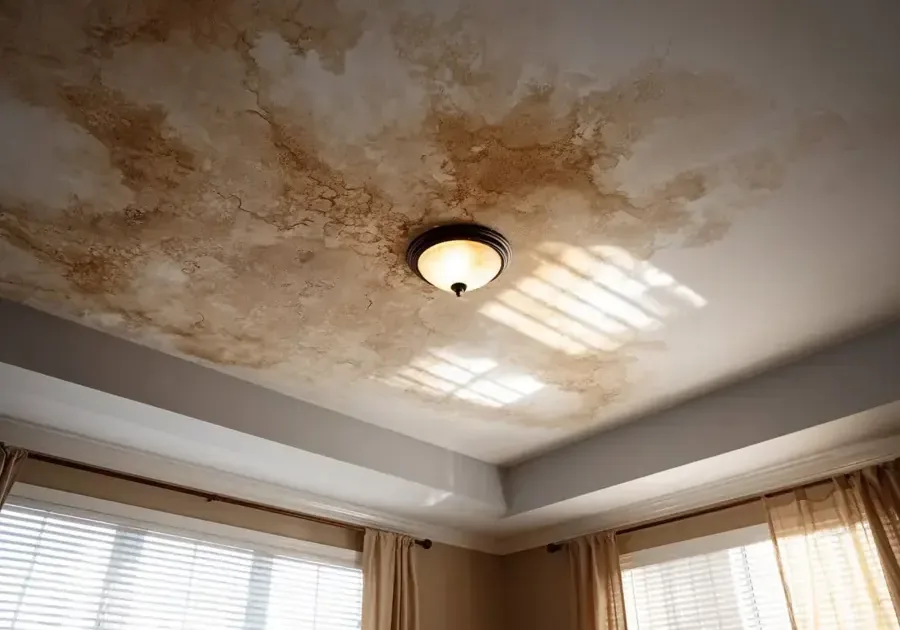
In a large house that has been split into apartments, a ceiling stain usually points to the unit above. This post covers what to do, who to tell and how the wet ceiling is dried.
Key takeaways
- A ceiling leak in a multi-family house usually starts in the unit above, so the first step is reaching the household up there.
- A bulging ceiling can be relieved with a small hole at the lowest point so the water drains into a bucket, with a clear stay-away from light fixtures.
- Written notice to the owner and a set of dated photos protect every household's claim.
- Wet drywall and insulation above and below the ceiling are dried or removed based on meter readings.
- The owner's policy usually covers the building, and a renters policy usually covers a tenant's belongings.
Why older houses raise the stakes
The Lansdowne Economic Development Corporation says Lansdowne has the largest concentration of Victorian-era homes in Pennsylvania. Many of those large houses have been converted for multi-family use.
The borough's apartments also include garden-style complexes and traditional buildings in Art Deco, Tudor and other styles. In every one of them, a ceiling is also somebody else's floor.
That means one overflowing tub or failed valve can reach a second household before anyone is awake, and sometimes a third.
Why a leak can run for a long time unnoticed
The 2020 Census counted 4,732 households in Lansdowne, and about 34.5 percent of them were one person living alone. In a building with several small units, some of them sit empty for long stretches of the day.
A tub left running, a supply hose that splits or a drain that backs up can keep spilling while the household is at work. By the time anyone returns, the water has often crossed a floor and soaked the ceiling of the unit beneath.
Finding the source above
Knock, call or leave a note for the upstairs household right away. If nobody answers and water is still running, the building owner or manager can shut off the water to that unit.
- A tub or sink that overflowed or was left running.
- A toilet supply hose or wax ring that failed.
- A dishwasher or washer connection.
- A pipe fitting or radiator valve inside the floor or wall above.
- A roof or window leak, when the stain is on the top floor.
Protecting the room below
Relieve a bulging ceiling
If the ceiling sags and holds water, carefully puncture a small hole at the lowest point with a screwdriver so the water drains into a bucket. Stand clear, wear eye protection, and keep away from light fixtures and any wet wiring.
Move and cover
Protecting belongings takes only a few minutes of work and saves a great deal of cost.
- Move furniture and electronics out of the drip zone.
- Cover what cannot be moved with plastic.
- Switch off lights on the wet circuit if the fixture is wet.
- Photograph the ceiling before and after anything is opened.
Who tells whom, and what to keep
When several households share a building, clear records prevent arguments later. Notice goes to the owner or manager in writing, with dates and photos attached.
The owner's policy normally covers the building, and a tenant's renters policy normally covers the tenant's belongings. Both depend on the wording, so each household should report its own loss.
- Date-stamped photos of each wet surface.
- A list of damaged belongings with approximate values.
- Names and times of every person who was told.
- Receipts for any emergency spending.
How a wet ceiling is dried
Ceiling drywall that is saturated, stained or sagging is usually cut out, because it holds water and can crumble. Insulation above it is removed when wet, since it stays wet and cannot be dried well.
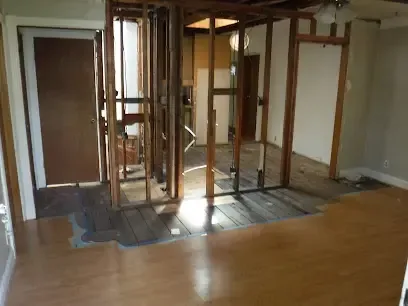
The joist bays and framing are then dried with fans and dehumidifiers until meter readings settle. A crew handling ceiling leak water damage works on the source and the lower floor together.
When the leak came from a split supply pipe, burst pipe water damage work adds a look inside the wall as well, and structural drying follows until the framing reads dry.
Light fixtures, wiring and insulation
Water travels along wiring and collects in light fixtures, which makes a wet ceiling an electrical concern as well as a moisture problem.
A fixture that is wet, discolored or dripping should be left off, and the circuit should be checked before it is used again.
- Do not flip a switch for a fixture with water inside it.
- Ceiling fans and recessed lights are opened and checked before reuse.
- Insulation above a wet ceiling is bagged and removed.
- The ceiling cavity is dried and measured before new drywall is hung.
What the crew documents for the insurer
A good file makes a claim easier for everyone in the building. The crew photographs each wet surface before opening it, records meter readings at each visit and notes what was removed and why.
Each household's loss is kept separate, so an adjuster can see which damage belongs to which unit. More local help for converted houses is on the Lansdowne water damage hub.
- Before and after photos of every opened surface.
- A dated log of readings from the first visit to the last.
- A list of materials removed, by room and by unit.
- A written summary the owner can hand to the insurer.
Permits, older details and rebuilding
The borough's Zoning Department regulates building development, inspections and building-related codes, and it handles zoning permits and building permits and inspections. Larger rebuilds are worth checking with that department before work begins.
Historic zoning compliance applies in the downtown historic district only. Two neighborhoods, the Henry Albertson Subdivision district and the Lansdowne Park district, hold 172 homes on the National Register of Historic Places, so original trim and ceiling details are worth photographing before anything is removed.
Preventing the next leak from above
Older multi-family houses benefit from routine checks, because the same few parts fail again and again. Owners and tenants can share the work.
- Replace old toilet and sink supply hoses with braided stainless ones.
- Check the caulk around tubs and showers each year.
- Know where each unit's shutoff valve is.
- Report slow drips and stains in writing as soon as they appear.
Questions
Who is responsible when a leak comes from the apartment above?
That depends on the cause, the lease and the insurance policies involved. The owner or manager should get written notice quickly, and each household should report its own loss to its insurer.
Should a hole be poked in a bulging ceiling?
A small hole at the lowest point can drain the water in a controlled way and keep the whole panel from falling. Stand clear, wear eye protection and avoid light fixtures.
How soon can mold grow in a wet ceiling?
Growth can start within a day or two in damp materials, which is why wet drywall and insulation are dealt with quickly.
Does a ceiling leak always mean the ceiling must come down?
No. A small stain on dry drywall may only need drying, while a sagging or soaked ceiling usually comes down. Meter readings decide.
Can a tenant call a restoration crew directly?
A tenant can ask for help with the unit, but opening walls or ceilings in a building the tenant does not own generally needs the owner's approval.